
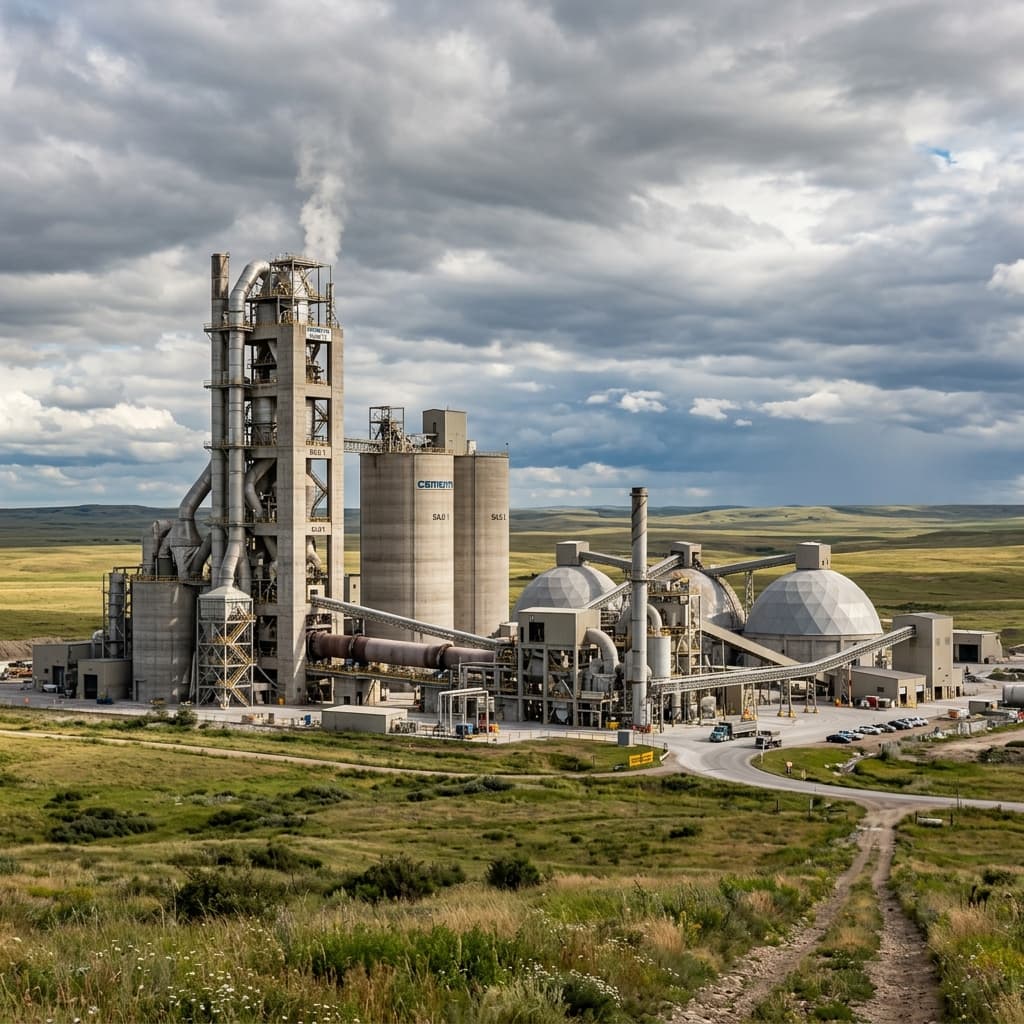
In the relentless pursuit of thermal efficiency and carbon reduction, cement plant operators are aggressively expanding alternative fuel substitution rates (AFR). However, non-uniform secondary airflow profiles and high chlorine/sulfur volatiles create refractory build-up and burner pipe erosion.
1. Executive Summary & Thermal Challenges
Alternative fuels such as RDF (Refuse Derived Fuel), tire-derived shreds, and biomass exhibit lower calorific value and irregular particle trajectories compared to pulverized petcoke or coal. As a result, incomplete combustion leads to:
- Excessive CO emissions in preheater exit gases.
- High secondary airflow stratification causing localized kiln shell hot spots.
- Build-up rings in calciner cyclones and kiln inlet arches.
2. 3D Computational Fluid Dynamics (CFD) Solution
MacProtec process engineers utilize multi-phase Computational Fluid Dynamics (CFD) to model kiln combustion physics:
- Eulerian-Lagrangian Particle Tracking: Simulating flight trajectories, devolatilization, and burnout times for disparate RDF particle size distributions.
- Tertiary Air Momentum Balancing: Re-aligning tertiary air injection duct angles to create a controlled vortex, maximizing oxygen-fuel contact time in the calciner.
- Burner Tip Aerodynamics: Custom-engineered primary air nozzle geometry to produce a stable, tight flame envelope that protects refractory brick linings.
3. Operational Results & Verified Energy Savings
- AFR Substitution Rate: Safely increased from 28% to 65% thermal substitution without CO spikes.
- Specific Heat Consumption: Reduced overall thermal energy consumption by 14 kcal/kg clinker.
- Refractory Campaign: Extended continuous kiln refractory campaign from 9 months to 18 months without unexpected shut-downs.