
Aggregate & Supplemental Cementitious Materials (SCM)
Concrete, the most widely used construction material globally, owes its versatility and strength to the careful combination of aggregates and cementitious materials. While aggregates provide bulk and stability, cementitious materials bind the mixture together, imparting cohesion and durability to concrete structures. MACPROTEC's deep domain expertise in Supplemental Cementitious Material and Aggregate Industries puts us in a unique position to help the industry achieve sustainable, high-performance production.
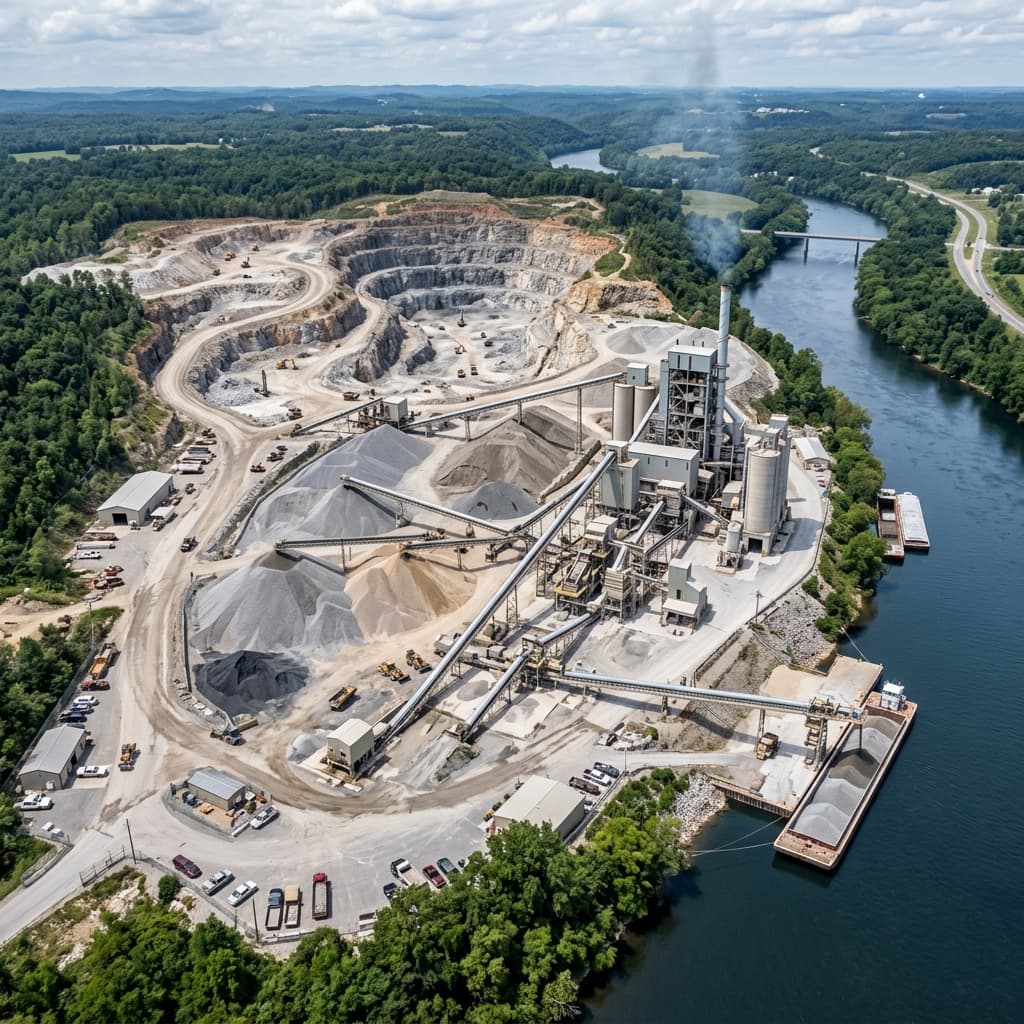
Foundational Components of Modern Concrete
In recent years, there has been a growing emphasis on incorporating sustainable practices into concrete production, focusing on the synergy between quality aggregates and supplementary cementitious materials.
Aggregates
Aggregates are granular materials such as sand, gravel, crushed stone, and recycled concrete that form the bulk of concrete. They provide mechanical strength, stability, and dimensional stability to the concrete mixture. Different types of aggregates, including natural and recycled sources, are selected based on factors such as particle size, shape, density, and strength characteristics.
Cementitious Materials & SCMs
Cementitious materials, primarily Portland cement, serve as the binding agent in concrete, adhering the aggregate particles together through hydration. In addition to Portland cement, SCMs such as fly ash, slag cement, silica fume, and metakaolin are increasingly used to partially replace cement content in concrete mixtures. SCMs offer several benefits, including improved durability, reduced carbon emissions, and enhanced workability.
MACPROTEC's Role in Aggregate & SCM Sustainability
How our engineering solutions empower aggregate producers, recyclers, and concrete manufacturers to achieve resource efficiency, lower carbon footprints, and divert waste.
Resource Efficiency
Helps sourcing locally available aggregates and recycled materials in reducing the need for extraction of virgin resources, minimizing environmental impact and conserving natural resources.
Carbon Emissions Reduction
We do full front-end loading (FEL) studies of SCMs. SCMs, by replacing a portion of Portland cement in concrete mixtures, reduce the carbon footprint associated with cement production. SCMs are typically industrial by-products or waste materials that would otherwise be landfilled, contributing directly to a circular economy.
Waste Reduction
Work with waste recyclers and aggregate/concrete producers in incorporating recycled aggregates and SCMs into concrete. This reduces the volume of construction and demolition waste sent to landfills, promoting waste diversion and sustainable waste management practices.
Unlock Sustainable Concrete Production with MACPROTEC
MACPROTEC's deep domain expertise in Supplemental Cementitious Material and Aggregate Industries puts us in a unique position to help the industry optimize processing, conduct front-end engineering studies, and achieve decarbonization goals.