
Bulk Material Handling
CFD & Process Simulation
MACPROTEC provides comprehensive Computational Fluid Dynamics (CFD), DEM particle transport, pneumatic conveying, transfer chute dynamics, hopper/silo discharge optimization, dust extraction & suppression, erosion modeling, and root cause failure diagnostics tailored specifically to bulk material handling systems.
MACPROTEC Specialized Bulk Material Discipline
Our domain covers transfer chute DEM modeling, pneumatic conveying lines, silo discharge arching/ratholing, dust suppression, and conveyor belt loading.
Engineering Services
Cards for MACPROTEC specialized CFD and process engineering disciplines applied to bulk material handling. Click any card to inspect its complete technical dossier below.
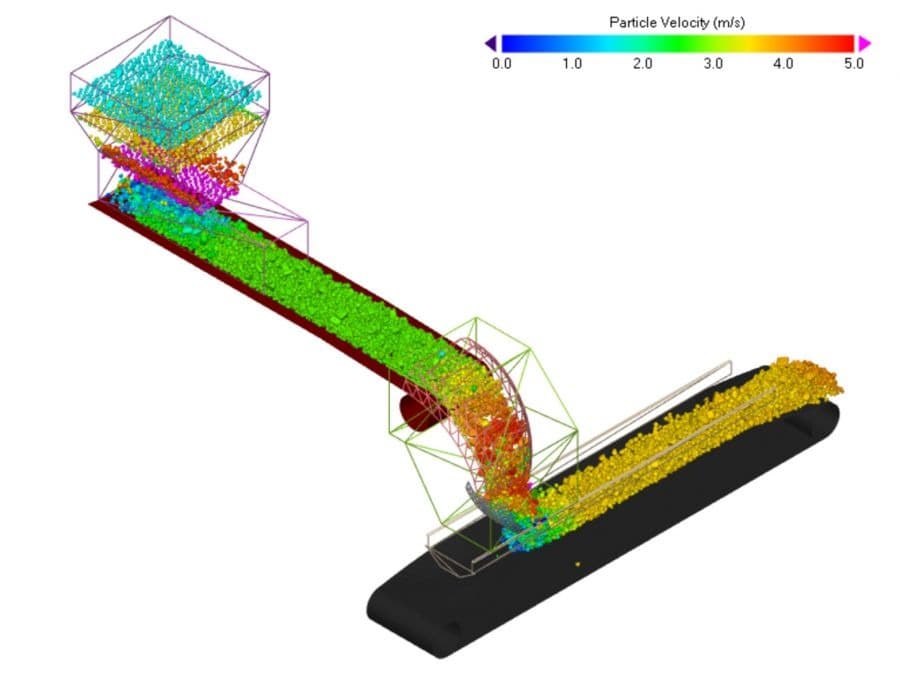
Bulk Material & Particle Flow Analysis
Advanced CFD-DEM particle flow simulation to evaluate bulk solids movement, segregation, impact velocities, build-up, and transfer point capacity.
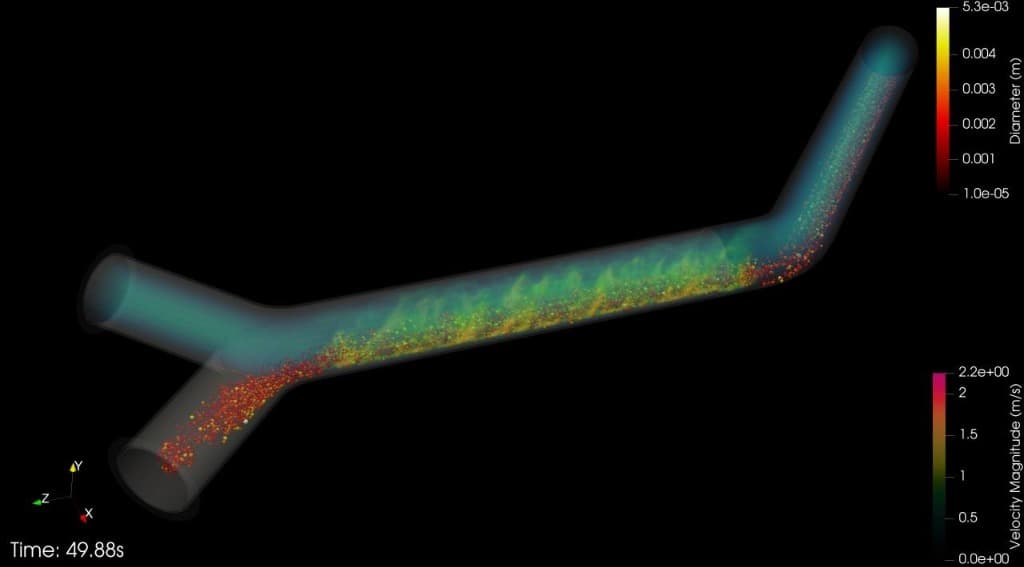
Pneumatic Conveying & Gas-Solid Flow Analysis
Simulation of dilute and dense phase gas-solid transport to optimize conveying velocity, pressure drop, particle deposition, and bend erosion.
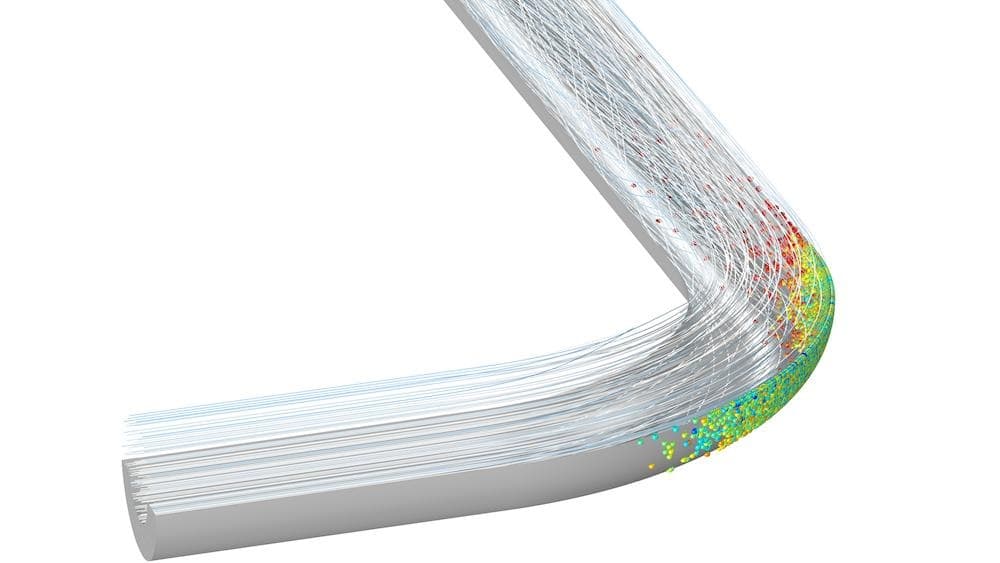
Chute & Transfer Point Flow Analysis
CFD-DEM modeling of material movement through transfer chutes, crusher feed chutes, and diverters to optimize stream centering and eliminate belt damage.
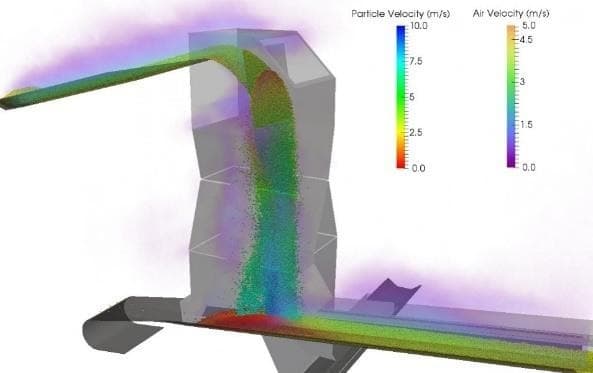
Hopper, Bin & Silo Flow Analysis
DEM and CFD-DEM simulation of filling, storage, mass-flow vs funnel-flow patterns, arching, ratholing, and feeder interaction in storage silos.
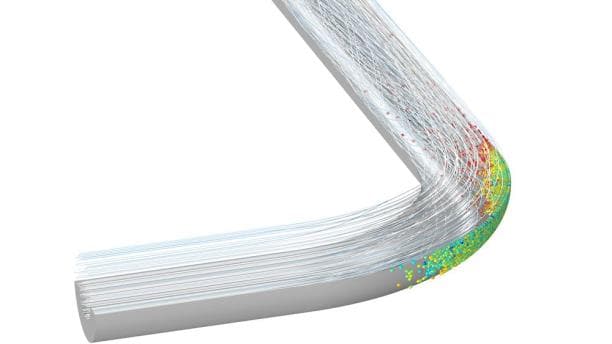
Dust Extraction & Suppression Analysis
Airflow entrainment and particle dispersion modeling to design hood geometry, enclosure seals, and extraction pick-up points across handling systems.
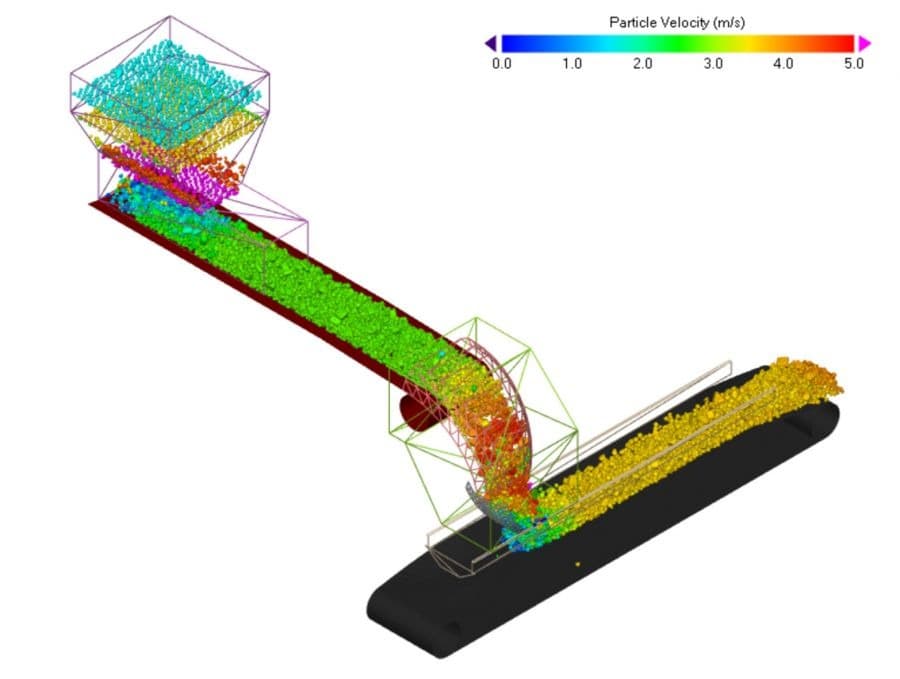
Conveyor Transfer & Loading Analysis
Simulation of conveyor belt material landing points, belt speed matching, material centering, off-center loading mitigation, and rollback prevention.
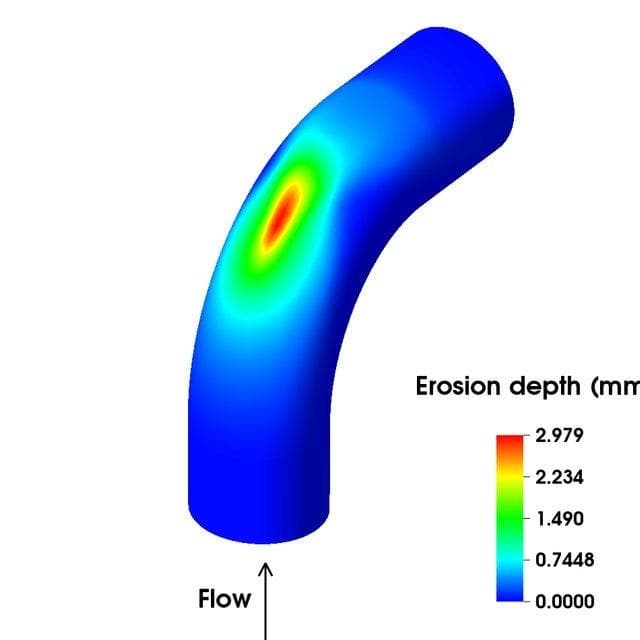
Erosion & Wear Analysis
Quantitative prediction of particle impact angles, sliding friction wear, liner wear-rate maps (mm/year), and protective liner arrangement optimization.
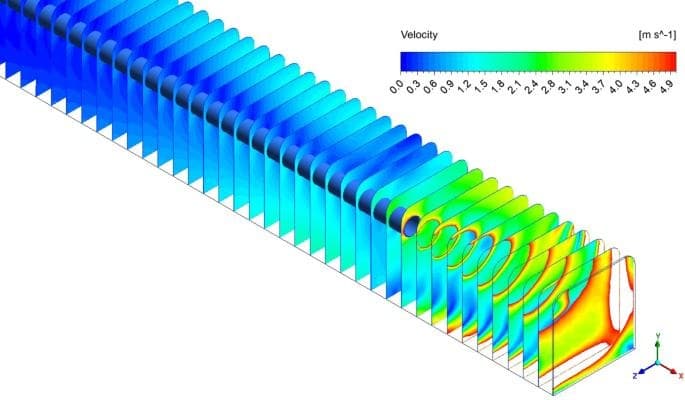
Root Cause CFD Investigation
Multi-physics CFD and CFD-DEM investigation to isolate physical mechanisms causing recurring chute blockages, dust escape, and material hang-up.
Service Technical Dossier
Detailed physics specifications, deliverables, engineering analyses, and key benefits.
Bulk Material & Particle Flow Analysis
Reliable bulk material flow is essential for maintaining stable throughput across material handling and storage systems. Variations in particle size, moisture, material properties, equipment geometry, and operating conditions can result in segregation, material build-up, uneven discharge, excessive impact, spillage, and flow restrictions.
MACPROTEC applies advanced particle-flow simulation, including CFD-DEM and DEM-based analysis where appropriate, to evaluate the movement and interaction of bulk solids throughout handling systems. Our studies provide detailed insight into particle trajectories, material distribution, impact behavior, and flow patterns, helping optimize equipment geometry, improve material transfer, and reduce operational problems.
- Particle trajectory and bulk material flow analysis
- Material velocity and distribution assessment
- Particle segregation and size distribution behavior
- Material build-up and stagnant-zone identification
- Chute trajectory and transfer performance analysis
- Hopper, bin, and silo discharge behavior
- Particle impact velocity and impact-zone assessment
- Material spillage and uncontrolled trajectory investigation
- Flow distribution to downstream equipment
- Influence of particle size, moisture, and material properties
- Equipment geometry and operating-condition optimization
- Particle trajectory and material-flow visualizations
- Material velocity and distribution maps
- Build-up and stagnant-zone identification
- Segregation and discharge-performance assessment
- Particle impact and high-wear zone identification
- Chute and transfer-point performance evaluation
- Comparative assessment of design alternatives
- Engineering recommendations for material-flow optimization
- Improve bulk material flow and transfer efficiency
- Reduce blockages, build-up, and material hang-up
- Minimize segregation and uneven material distribution
- Reduce spillage and material losses
- Minimize excessive particle impact and equipment wear
- Improve conveyor loading and downstream feed uniformity
- Increase handling capacity and system reliability
- Support new equipment design and existing-system modifications
- Reduce maintenance requirements and unplanned downtime
Why Choose MACPROTEC for Simulation?
We combine deep bulk handling process knowledge with advanced computational physics and DEM modeling to solve complex chute, silo, and conveying challenges.
Deep Bulk Material Handling Domain Expertise
Specialized material handling, pneumatic transport, and particle dynamics engineers with extensive experience across transfer chutes, silos, hoppers, and port terminals.
High-Fidelity DEM & CFD-DEM Physics
Coupled CFD-DEM particle modeling of bulk solids trajectories, particle segregation, dense/dilute phase gas-solid transport, and impact energy distribution.
Zero Risk Virtual Design Validation
Test transfer chute geometry modifications, hopper cone angles, dust extraction hood placement, and pneumatic line velocities in a virtual simulation environment.
Actionable Engineering Deliverables
Clear visual particle velocity maps, material build-up zone identification, erosion rate contours (mm/year), and CAD-ready chute/hopper modification drawings.
Erosion & Belt Damage Prevention
Predict particle impact angles and material centering to optimize wear-liner placement, prevent off-center conveyor loading, and extend belt lifespan.
Proven Debottlenecking Track Record
Consistently resolving transfer chute plugging, silo ratholing/arching, pneumatic pipe blockage, fugitive dust escape, and belt wear in major bulk handling facilities worldwide.
Optimize Your Bulk Material Systems
Get a Tailored Simulation Proposal
Connect with our senior engineering team to evaluate particle properties, transfer chute geometries, CAD models, and target performance improvements.